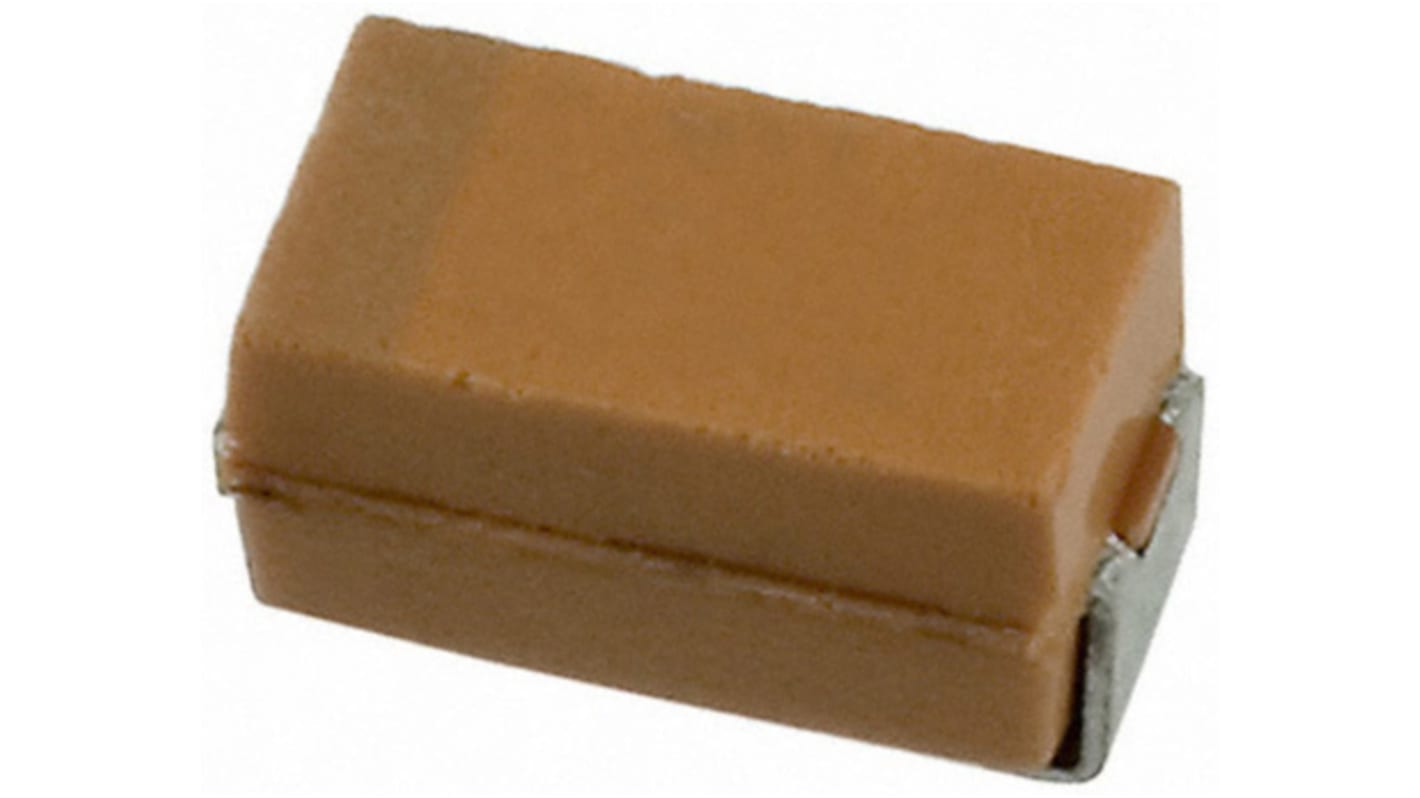
KYOCERA AVX 10 μF Niobium Capacitor 10V dc ±20 %, Surface 3.2 mm, NOJ

Subtotal (1 reel of 2000 units)*

Kr. 3 006,00

(exc. VAT)

Kr. 3 758,00

(inc. VAT)

Add to Basket
Select or type quantity
Stock information currently inaccessible - Please check back later
Units
Per unit
Per Reel*
2000 +Kr. 1,503Kr. 3 006,00

*price indicative

RS Stock No.:
144-1850
Mfr. Part No.:
NOJA106M010RWJ
Brand:
KYOCERA AVX
Find similar products by selecting one or more attributes.
Select all

Brand

KYOCERA AVX

Product Type

Niobium Capacitor

Series

NOJ

Capacitance

10μF

Tolerance

±20 %

Voltage

10V dc

Packaging

Tape & Reel

Package/Case

3216-18

Polarity

Polar

Mount Type

Surface

Equivalent Series Resistance ESR

2.2Ω

Dissipation Factor

6%

Terminal Type

Surface Mount

Leakage Current

2μA

Minimum Operating Temperature

-55°C

Maximum Operating Temperature

105°C

Standards/Approvals

RoHS

Height

1.6mm

Width

1.6mm

Surge Voltage

13V

Ripple Current

0.08A

Automotive Standard

AEC-Q200

Length

3.2mm

AVX Niobium Oxide Capacitors


AVX oxicap capacitors feature niobium oxide as the main material for the anode electrode for general applications. Niobium oxide has much higher ignition energy (200 times) and much lower burning rate than Pure metal materials such as Tantalum or Niobium. This feature means that OxiCap® multiylayer ceramic capacitors will not burn up to the category voltage. They are suitable for applications with rail voltages of up to 7 V.

Features


Non- burn safe technology

CV range: 2.2 to 1000 μF / 1.8 to 10 V

13 case sizes available

Reliability level: 0.5%/1000 HRS. At 85°C

Applications


In-cabin entertainment systems

Seat position modules

Airbag controls etc.

1206 Range


C0G (NP0) is the most popular formulation of the "temperature-compensating", EIA Class I ceramic materials

X7R formulations are called "temperature stable" Ceramics and fall into EIA Class II materials

Y5V formulations are for general-purpose use in a limited temperature range.These characteristics make Y5V Ideal for decoupling applications

Related links